Kiosk Or General Work Zone Hoarding: Where Does It Fit on a Construction Site?
Not every construction area has a straight boundary, a perfectly level floor, or enough space for a conventional temporary barrier. A refurbishment inside a shopping centre, a kiosk upgrade, or a work zone around stairs can quickly make standard site separation difficult.
This is where Kiosk Or General Work Zone Hoarding can become a practical option. Rather than treating hoarding as simply a wall around construction, it can be planned around the actual conditions of the work area, including unusual layouts, internal spaces and areas where access needs to remain open.
For a Construction Contractor, the real question is not simply whether hoarding is required. It is whether the chosen system can accommodate the site without creating another problem.

What is Kiosk Or General Work Zone Hoarding used for?
Kiosk Or General Work Zone Hoarding is designed for creating a controlled separation around smaller or general construction work zones where a conventional site boundary may not be practical.
It can be relevant to retail refurbishments, kiosk upgrades, internal construction areas, commercial maintenance projects and other work zones where the public or other workers remain nearby.
The arrangement needs to match the work being performed. A small retail construction area, for example, may need a defined boundary without closing the surrounding shopping area completely.
That makes the planning of the hoarding just as important as the hoarding itself.

Where can Kiosk Or General Work Zone Hoarding be installed?
One of the practical considerations when selecting Kiosk Or General Work Zone Hoarding is the physical condition of the proposed installation area.
Some projects involve ramps, stairs, uneven surfaces or restricted internal spaces. These conditions can make conventional Building Hoarding or Temporary Fencing difficult to position effectively.
A suitable hoarding system should therefore be assessed against the actual site rather than selected from a standard checklist.
Before ordering, measure the work zone and identify changes in floor level, pedestrian routes, access points, doors, stairs and equipment that may affect the proposed configuration.

Why is Kiosk Or General Work Zone Hoarding useful for retail projects?
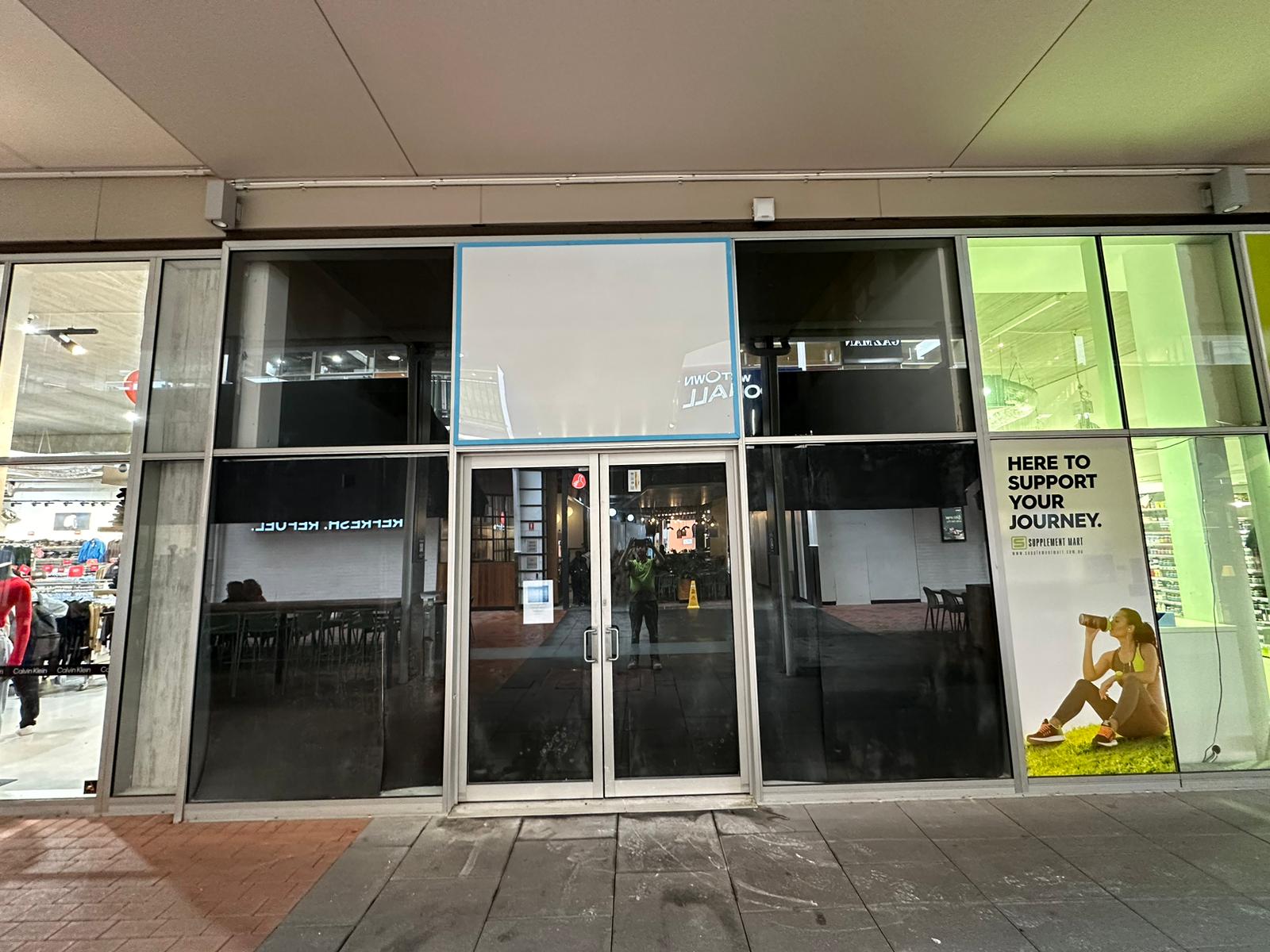
Retail construction presents a different challenge because the work may happen while customers, staff and neighbouring businesses continue operating.
Kiosk Or General Work Zone Hoarding can provide a defined separation between the work area and surrounding public space while allowing the project team to maintain a workable construction zone.
This can be particularly relevant to kiosk refurbishments where the footprint is relatively compact but the surrounding area remains active.
Shopfront Hoardings may also be considered where construction is taking place directly beside an operating tenancy. The appropriate choice depends on the site's layout, access requirements, project duration and risk profile.

How does site access affect the choice of work zone hoarding?
A common mistake is planning the hoarding boundary without considering how people and materials will enter and leave the work area.
Think about the route a worker takes when carrying materials. Consider where tools will be stored, where deliveries will arrive and whether doors, ramps or stairs need to remain available.
This is also where Kiosk Or General Work Zone Hoarding needs to be considered as part of the wider site setup rather than as an isolated product.
For some projects, Temporary Fencing may be appropriate around one section while solid hoarding is needed around another. Combining systems can make sense when different areas have different separation requirements.

Can work zone hoarding be used on uneven or difficult areas?
Some construction environments simply do not provide a clean, level footprint.
An adaptable hoarding arrangement may be useful where the work zone includes changes in level or unusual access conditions. The supplied reference describes a support system designed for adaptable configurations, including ramps, stairs and uneven surfaces.
However, site conditions should always be assessed before installation. The fact that a system can accommodate challenging areas does not mean every configuration is automatically suitable.
The installer and project team should confirm the proposed arrangement against the actual conditions on site.

Should you rent or buy work zone hoarding?
The choice between purchasing and using Hoardings to Rent usually depends on how long the work will remain in place and whether the equipment will be required again.
For a short refurbishment, temporary rental can avoid purchasing equipment that has little use after the project ends. Longer-term construction programs may require a different commercial calculation.
The project also needs to account for delivery, installation, modifications and eventual removal. Comparing only the basic hire price can leave out important parts of the actual project cost.

How does Kiosk Or General Work Zone Hoarding compare with standard hoarding?
The distinction is mainly about application and adaptability rather than simply the appearance of the finished barrier.
A general Construction Hoarding arrangement may be planned around a larger construction boundary, while Kiosk Or General Work Zone Hoarding can be considered for more contained or unusual work zones.
Class A Hoardings and Class B Hoardings may also have specific applications depending on the project's requirements. The correct system should be selected according to the site conditions, engineering requirements and level of protection required, rather than based solely on the category name.
A Perth supplier such as Hoardings WA may be able to discuss different configurations where the site does not suit a straightforward hoarding layout, but the final arrangement should always be based on the project's actual requirements.

What should a Construction Contractor check before hiring work zone hoarding?
Before arranging Kiosk Or General Work Zone Hoarding, review the proposed footprint, access requirements, floor conditions, installation method, height requirements and interaction with surrounding operations.
Also consider what happens after installation. Will the hoarding need to be moved as construction progresses? Will deliveries change? Could the pedestrian route change during the project?
A work zone that looks straightforward on day one can become very different once demolition, fitout, deliveries and finishing trades begin.

FAQ: Kiosk Or General Work Zone Hoarding
What is Kiosk Or General Work Zone Hoarding?
Kiosk Or General Work Zone Hoarding is a temporary hoarding solution used to separate defined construction or refurbishment areas from surrounding spaces. It can be useful for kiosks, retail work zones and other projects where a flexible configuration is required.
Is Kiosk Or General Work Zone Hoarding suitable for shopping centres?
It can be suitable where construction takes place within or beside an operating retail environment. The layout should account for customers, staff, deliveries, emergency access and neighbouring businesses.
Can work zone hoarding be used around ramps and stairs?
Some engineered systems are designed for adaptable installation around ramps, stairs and uneven surfaces. The specific configuration must be assessed against the site conditions before installation.
Is Temporary Fencing an alternative to work zone hoarding?
It can be appropriate for some applications, but the two systems provide different types of separation. The decision should consider the location, public exposure, security, visibility and construction activity.
Can I hire Kiosk Or General Work Zone Hoarding?
Temporary hire can be an option for projects where the hoarding is only required for a defined construction period. Confirm what is included in the quotation, including delivery, installation, adjustments and removal.
How do I choose the right work zone hoarding?
Start with the site rather than the product. Assess the work area's size, surface, access points, pedestrian movement, surrounding businesses and expected construction activities. This gives the supplier enough information to recommend a suitable configuration.